
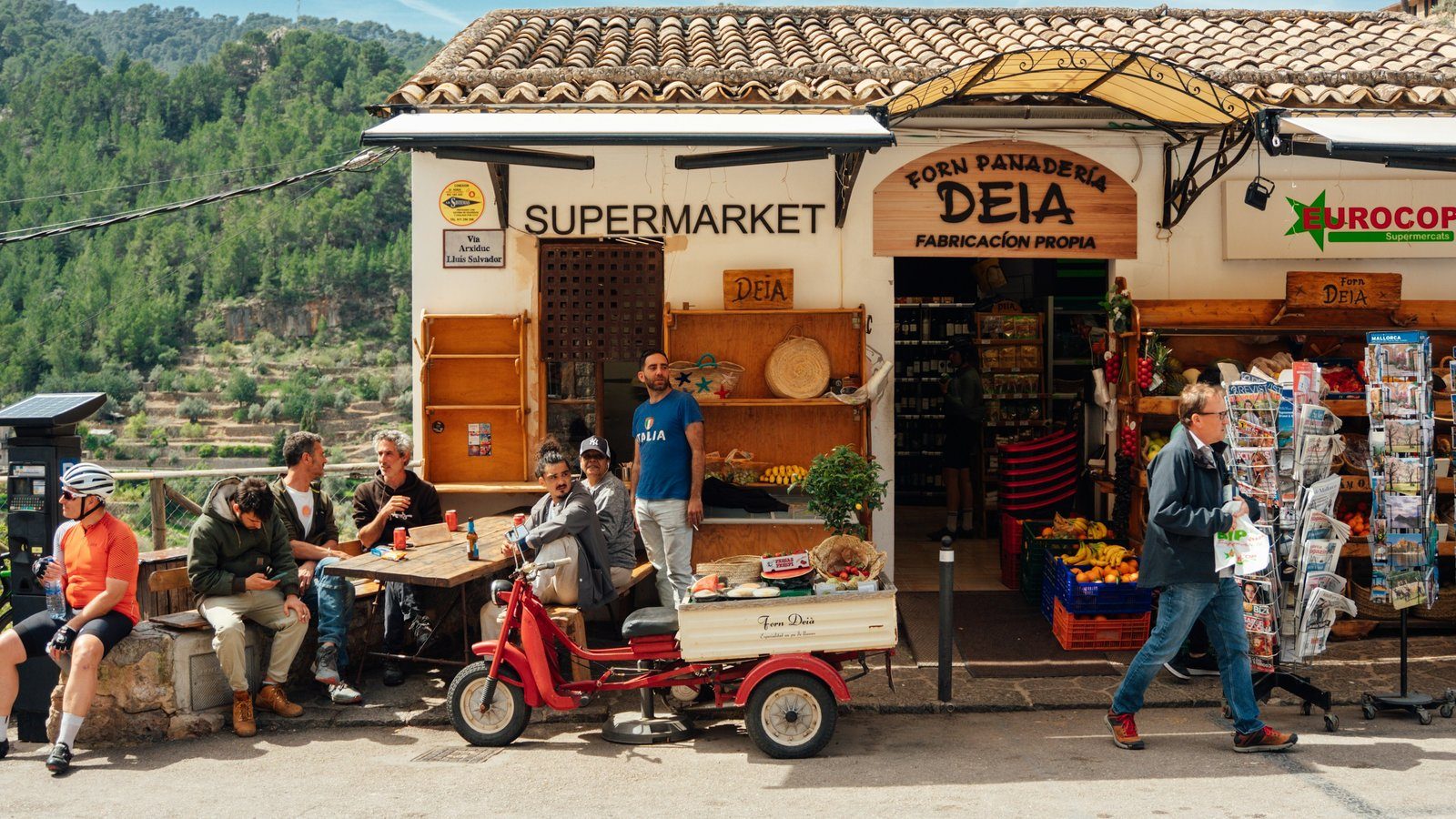
In many villages, the bar or the shop is much more than a business. It is the supermarket, the information point and the place where neighbours meet.
When it closes, the village loses more than a shop.
What the press says
In April 2026, the outlet Que.es reported that the Community of Madrid pays direct grants to keep village shops open. According to that report, up to 5,000 euros per shop in municipalities under 1,000 inhabitants, and 3,000 euros if it opens four days a week. The reason given is that the shop is at once supermarket, information point and meeting place, and often the last service left.
In Aragón, eldiario.es told in 2023 the story of Hinojosa de Jarque, a village of 150. Its residents had the nearest shop 20 kilometres away. A couple reopened the multi-service venue. The Teruel Chamber of Commerce, with provincial council money, keeps a network of these venues: 94 opened since 2003, according to the report. Twelve of them take WhatsApp orders for collection in the shop.
A bill about bars
The Local explained in 2023 a proposal from Teruel Existe to treat the bars and small businesses of villages under 200 people as social entities entitled to grants. According to that outlet, the proposal passed the Lower House with 303 votes for and 23 against. It also cites that 17.7% of municipalities, 1,435, have no hospitality venue nearby.
We have cited the figure as the source gives it. We have not checked where that proposal stands today.
Why we say "service point"
A village shop often does things that never go through the till: keeping a neighbour's keys, saying the bread has arrived, knowing who needs help.
Receiving parcels is one more function of that kind. It does not change what the shop is. It adds a reason for someone to walk in.
What a city shopkeeper says
In 2021, Xataka interviewed neighbourhood shopkeepers, not village ones, who had become collection points. One went from 60 or 70 parcels a month to more than 200. The commission per parcel is cents. What matters, they say, is the people who come in. The report mentions about 2 euros spent, on average, by each person who collects.
That case is a different kind of business in a different place. We do not promise the same will happen in a village. We tell it because it shows why a shop might want to do this.
How it works in RuralPoint
A business that wants to be a point receives the parcels of residents registered at its point. It keeps them in a safe place for a few days. It hands them to whoever shows the code. Every arrival and every handover is recorded in the app.
The business carries nothing. It does not charge the resident. It does not see their identity document. It does not hand over without a code. If it has no space, the point is marked full and receives no more until parcels are collected.
There is no exclusivity: it can keep working with whoever it likes.
The pilot's financial terms are agreed in writing before the first parcel is received. There is no figure we can promise today.
If you run a business in a pilot village
Write to us. We verify each business before publishing it, with its opening hours.