
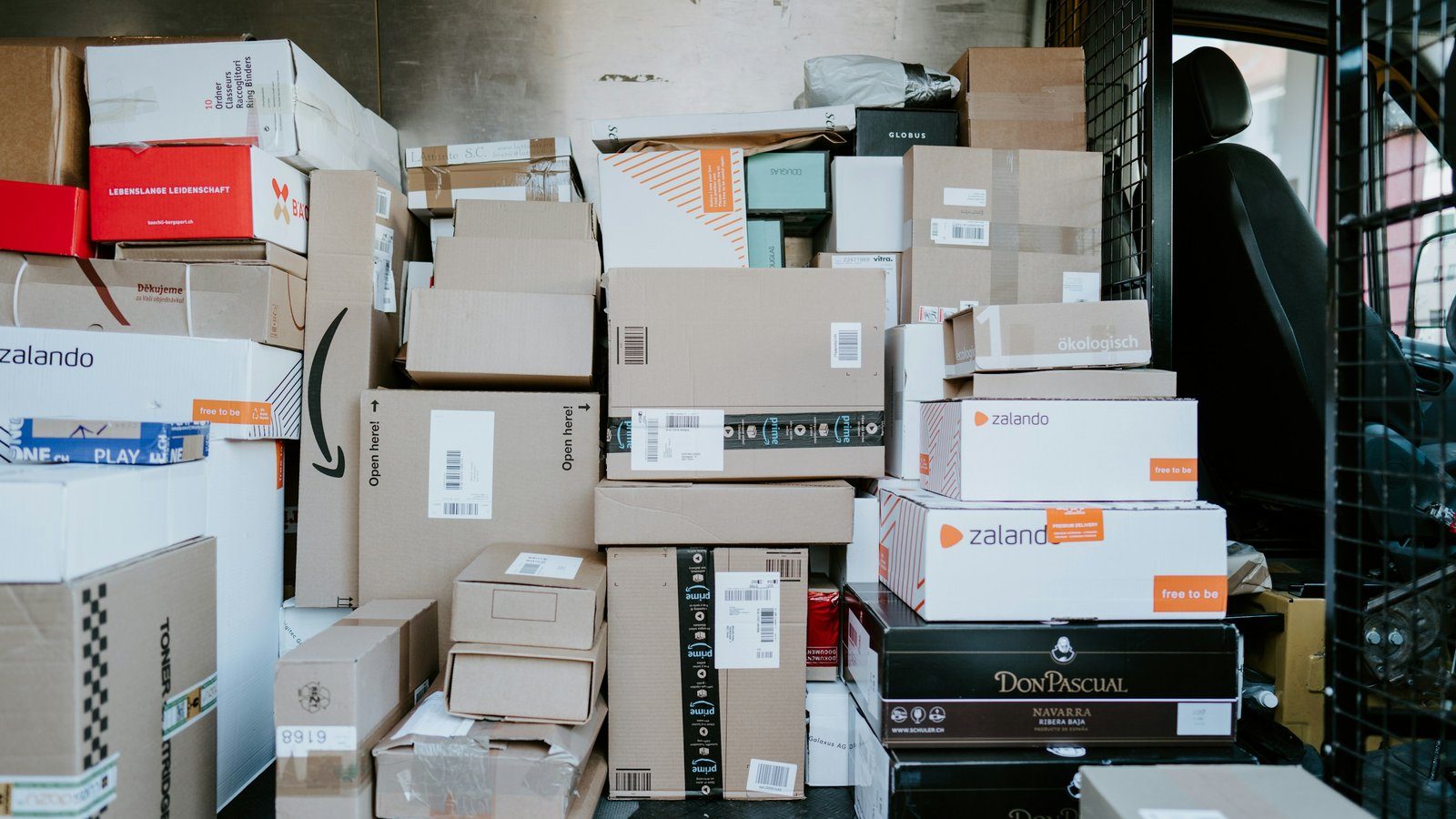
You buy something online. The order ships. Days pass and the parcel does not show up.
In a city, that is an annoyance. In a small village, it can mean a half-hour drive, or a week of waiting.
What residents say
The Spanish consumer organisation OCU publishes complaints from its users. Two of them help us understand the problem. They are not statistics. They are real cases, told by the people who lived them.
In December 2023, a resident of Cabra de Mora, in Teruel, wrote that couriers phoned to ask him to collect the parcel in the next village. By his account, they were talking about around 30 kilometres. He also said the couriers claimed they lose money by driving out to his village.
In January 2023, a customer in the Sierra de Cádiz told a different story. One parcel lost and marked as delivered. Five more orders stuck in transit. By the customer's account, a former driver explained that nobody covered the area and that parcels piled up in El Puerto de Santa María, on the coast.
We do not know how often this happens. Two complaints do not measure a country. But they describe the same pattern in two different regions: the last stretch is what breaks.
Why the last stretch is hard
The industry knows this well. A 2023 article in Cadena de Suministro sums up the difficulties of rural delivery: drops are far apart, houses are badly marked, and a failed delivery means a long trip back. It also notes that in some areas the nearest parcel locker can be 20 kilometres away.
Rural logistics is costly and hard to organise. A report first published in ABC and reproduced by the Spanish Rural Development Network (REDR) in 2024 says the same. Companies are testing convenience points, drones, local couriers and shared routes to make delivery workable.
Who it affects
According to that same source, 15.9% of Spaniards, about 7.5 million people, live in rural areas. About 4.45 million live in municipalities of fewer than 5,000 people.
Not everyone has the problem. Many villages receive their parcels without trouble. But those who do have it face it alone: no office nearby, no locker nearby, and driving as the only option.
One fixed address in the village
The idea behind RuralPoint is simple. Each village has a trusted local business that accepts parcels for registered residents. The courier leaves the parcel at a known place with set opening hours. The resident collects it when it suits them, with a code.
For the courier, it is one clear stop. For the resident, it is a fixed address a short walk from home.
We believe this reduces failed deliveries. That is a hypothesis, not a proven fact. We are testing it with couriers and through the pilot in the Sierra de Cádiz and the Sierra Sur de Sevilla.
What you can do
If you live in a village and have been through this, we want to hear about it. If you run a bar, a shop or a petrol station, you could be your village's point.
Every figure we quote here links to its source in the list below. Check them yourself.