
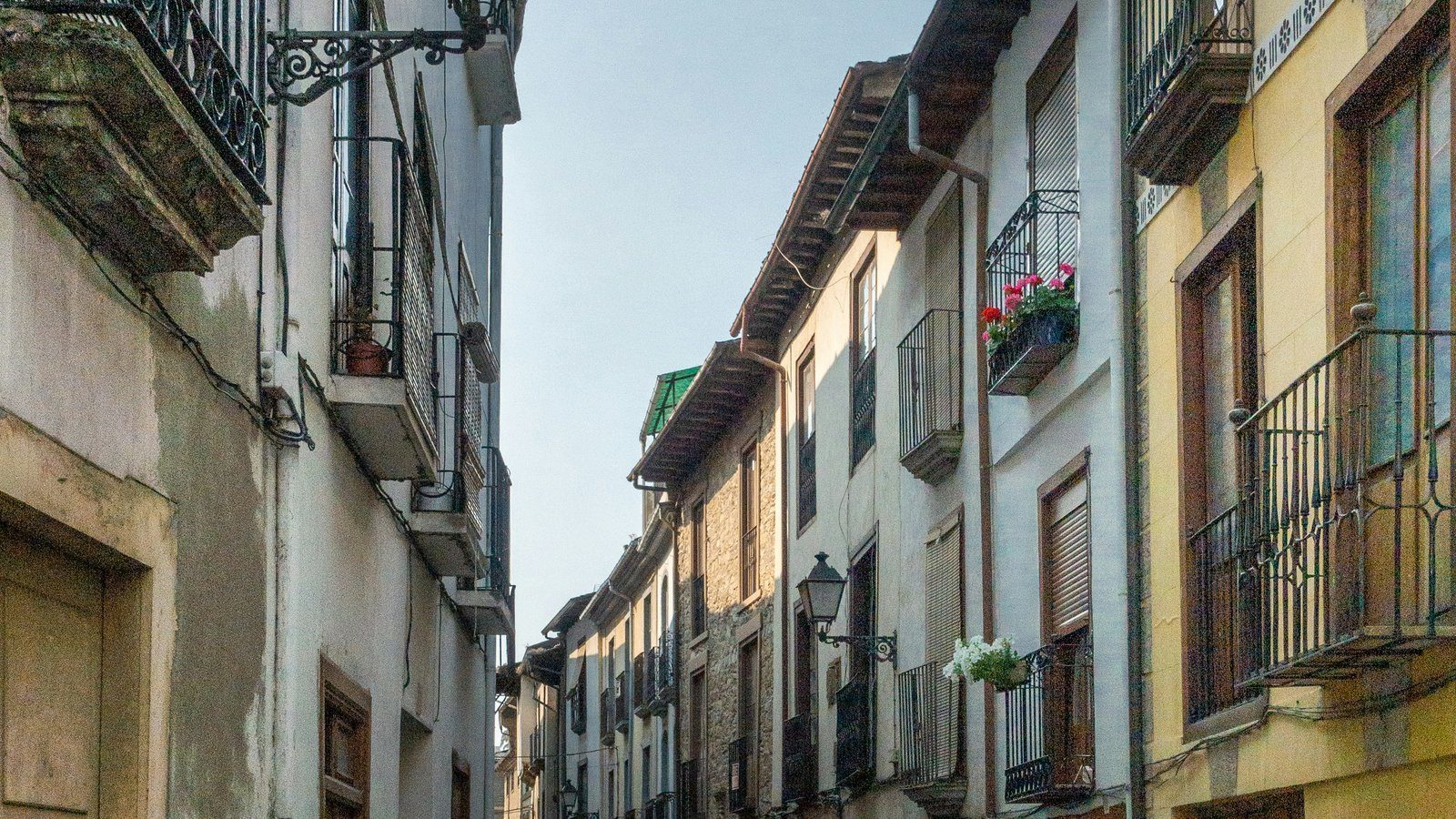
A courier arrives in a village with forty parcels. Six are for houses with no number. Two are for a farmhouse three kilometres down a track.
No study tells this story. It is a picture, to help you picture what the sources do say. What follows is what we can link to.
What the industry says
A 2023 article in Cadena de Suministro on the rural last mile lists three difficulties that keep coming back. Drops are far apart. Houses are badly marked. And when a delivery fails, the trip back is long.
A report first published in ABC and reproduced by the Spanish Rural Development Network (REDR) adds that delivering in sparsely populated areas is costly and hard to organise. Companies are trying convenience points, drones, local couriers and shared routes to make it pay.
None of these sources blames anyone. They describe a problem of geography: few houses, many kilometres.
When the first delivery fails
A failed delivery costs money. According to a 2025 article in Interempresas, one in five parcels is not delivered on the first attempt, and each incident costs about 15 euros. That figure is for e-commerce in general, not rural areas. We do not know how much higher it is in a village.
It seems logical that, with drops far apart, each failed attempt weighs more. But that is a deduction, not data.
Rural shoppers have fewer options
Lund University in Sweden published a warning in 2021 from its logistics researchers: e-commerce services are designed with cities in mind. In the countryside there are fewer delivery choices, and some goods cannot be delivered at all. The article gives no figures and is about Sweden, not Spain. We cite it because it describes the same mechanism.
What changes with a fixed address
Imagine the parcel does not have to find your house. It has to reach a bar or a shop on the square.
With RuralPoint, your address is an ordinary postal address. It carries your name, the point code and the business's address, with postcode and municipality. Any online shop accepts it, because it has the same format as any other. The courier does not have to integrate anything.
For the courier, it is a stop with a door, a number and opening hours. For you, it is a place you can walk to.
What we do not know yet
We do not know how much money it saves a courier to stop hunting for scattered houses. We believe it saves time, and that a few fixed stops are easier than many separate houses. That is a hypothesis. We will test it with couriers themselves, not take it as given without measuring.
And farmhouses, roadside inns, houses in the countryside
A point on a road can have an address too. A roadside inn between two villages is written as a road address, with its kilometre marker, the way it appears in the postal system.
If you live in a house in the countryside, your point may not be a hundred metres away. But it will be somewhere the courier finds the first time.
To finish
An address is not a detail. It is the difference between your parcel arriving or staying in a warehouse.
If your village has houses the courier never finds, tell us. It is the information that helps us most.